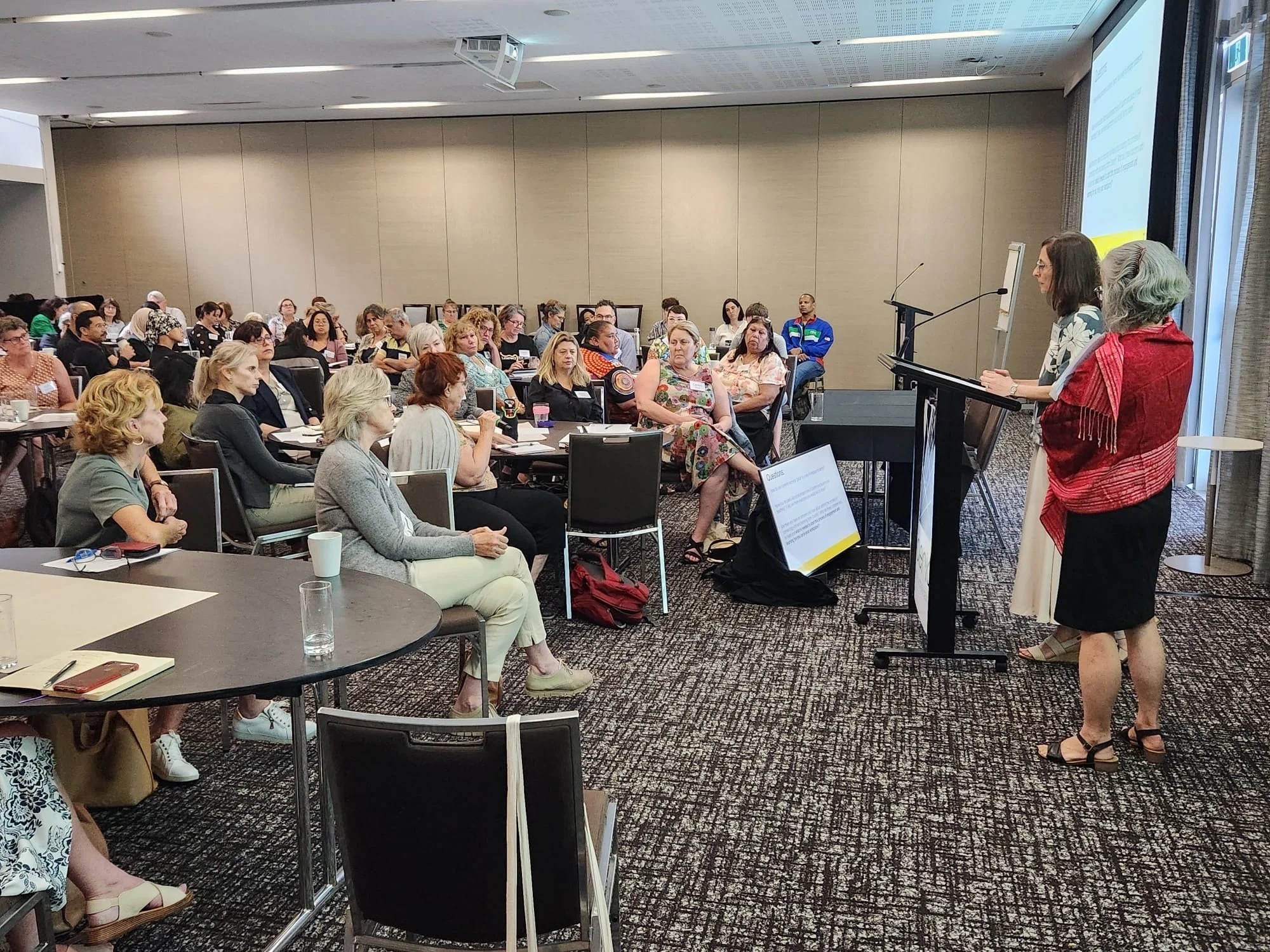
Conference
Adult Literacy and Numeracy for the 21st Century
Friday 11 December 2026
The first 25 years of this century have dramatically reframed how individuals and societies live and work. Impacted by significant political instability, dramatic cultural shifts, rapid technological development, environmental degradation, and even a global pandemic, the literacy and numeracy demands on young people and adults have intensified.
During the pandemic years, the Adult Literacy and Numeracy sector demonstrated its ability to respond rapidly to the digital and social challenges facing our learners. This response in turn accelerated the integration of digital technologies into teaching and learning.
But what about our response to other pressing 21st century challenges? What role do we play in supporting information literacy with the increasing pervasiveness of AI?
The UN Sustainability Development Goal on Quality Education highlights the importance of education that promotes social inclusion, humanistic values, and ethical responsibility. Target 4.7 aims to ensure that:
By 2030, all learners acquire the knowledge and skills needed to promote sustainable development, including, among others, through education for sustainable development and sustainable lifestyles, human rights, gender equality, promotion of a culture of peace and non-violence, global citizenship and appreciation of cultural diversity and of culture’s contribution to sustainable development.
This year's NSW ALNC conference asks participants to consider how Adult Literacy and Numeracy education can respond to these diverse challenges. Participants are encouraged to think about how their practice and/or advocacy work align with global goals for quality education for all.
Keynote Speakers
Professor Mia Perry
Mia Perry is a Professor of Arts and Literacies in Education at the University of Glasgow, and the Co-Director of the Sustainable Futures Global (SFG) Network. Working across many spaces of difference -- disciplines, geographies, sectors, cultures – Mia specialises in methodologies of engagement, collaboration and pedagogy to create ethical and sustainable partnerships to address local and global challenges of sustainability and equity. This work isdeeply intertwined with her disciplinary contributions in literacies and social arts. Mia is a leading expert in pluriversal literacies - encompassing literacies beyond print and spokenlanguage, as well as the arts in the service of education.
Dr Richard Voss
Dr Richard Voss is an Australian educator and educational researcher specialising in mathematics education, adult numeracy, and vocational education and training (VET). He holds a PhD and an MPhil focused on mathematics education. His research explores how students experience mathematics learning and how educational practices, curriculum design and assessment influence learners’ confidence, engagement and ability to apply mathematical knowledge in real-world contexts.
Dr Voss’s work examines the relationship between formal mathematics education, workplace numeracy and everyday life, with particular interests in social justice, equitable learning opportunities, teacher agency and the experiences of learners in vocational and applied education. His research advocates for more meaningful connections between mathematical learning and the practical, social and technological contexts in which numeracy is used. His work has been published in peer-reviewed journals, including the Journal of Vocational Education & Training, the International Journal of Training Research and the Australian Journal of Adult Learning.
Draft Program