 NSW Adult Literacy & Numeracy Council
The professional body for adult literacy and numeracy in NSW
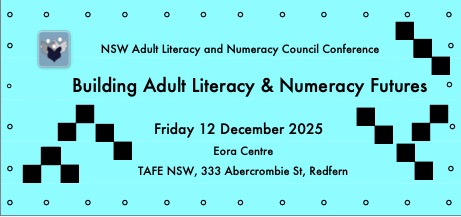
ABSTRACTS
KEYNOTE ABSTRACTS
___________________________________
KEYNOTE 1 – 9.30am - Main Theatre
Dr Suzanne SMYTHE
Associate Professor, Adult Literacy and Adult Education
Simon Fraser University, Canada
___________________________________
Adult literacies in algorithmic times: Pedagogies, resistance and reinvention
ABSTRACT
We are entering an algorithmic culture in which machines are reading and writing human life, and online data has become the currency through which meanings, decisions and futures are being generated for people. What does this future entail for 'literacy as we know it' and for adult literacy education?
In this keynote address, I share personal stories, theory, research, and moments from everyday literacy education programs in Canada to weave a future for adult literacy education in algorithmic times that mobilizes the field's eclectic roots, its capacity for inventive thinking, creative adaptation and deep empathy.
BIOGRAPHICAL STATEMENT
Suzanne Smythe works at the intersections of adult literacy, digital equity and community-based learning. Her current research program explores new technologies, literacies and digital justice in community-based adult learning settings, asking questions such as,
• How are automation and datafied ecosystems transforming literacies and pedagogies in community settings?
• How do we perceive and intervene in digital and algorithmic discrimination and exclusions as these occur in everyday encounters in digital education?
• What new theories, methods and critical and experimental pedagogies make more just digital ecosystems possible?
___________________________________
KEYNOTE 2 – 1.15pm - Main Theatre
Lindy CASSIDY Reading Writing Hotline
Carol Holden NSW TAFE
Joanne Medlin
___________________________________
Engaging potential literacy learners - what have we learnt?
ABSTRACT
This Keynote presentation and discussion looks at what research and practical experience tell us about engaging potential literacy learners.
We know from the PIACC data and calls to the Reading Writing Hotline that there are people with literacy and numeracy challenges who are not presenting at educational institutions. In this presentation and panel discussion we look at how we can engage potential literacy learners through addressing the multiple barriers to accessing literacy provision and support.
The Hotline will present findings from its current research looking at successful engagement strategies in the literature and recorded insights from teachers, practitioners and students. Carol Holden from TAFE NSW in regional NSW will present on the challenges and successes of her Here2Help program.
Presentations will be followed by a panel discussion with the presenters and Jo Medlin who carried out the Hotline research. This will be an opportunity for the audience to share their experiences and successful strategies.
BIOGRAPHICAL STATEMENTS
Carol Holden teaches Language, Literacy and Numeracy at TAFE NSW in Bega and collaborated with the Bega Valley Shire Library to found Here 2 Help Literacy and Numeracy Hub in 2022.
Jo Medlin is a literacy and numeracy academic and advocate. Her areas of interest include increased access to educational services for those who want them, and widespread adoption of readability measures and plain language to benefit us all.
Lindy Cassidy is the Partnerships Project Officer at the Reading Writing Hotline and has extensive experience in prison and outreach education in curriculum, policy and project development.
PAPERS and WORKSHOPS
___________________________________
Mohammad ALI - 3.05pm - Room 1.20
NAVITAS
___________________________________
Using games in teaching Literacy and numeracy
ABSTRACT
This workshop is designed to enhance students’ literacy and numeracy skills through the integration of educational games. The aim is to provide learners with an engaging, supportive, and interactive approach to learning that fosters confidence, motivation, and practical skill development. Using games as a teaching tool encourages collaboration, problem-solving, and active participation, making literacy and numeracy more accessible and enjoyable for adult learners. The rationale for this workshop is based on research showing that game-based learning increases retention, reduces anxiety, and supports diverse learning styles. The session will be conducted through hands-on activities, small group tasks, and guided discussions.
BIOGRAPHICAL STATEMENT
Mohammad Ali is a certified Trainer of Trainers from the British Council and a Certified Professional Trainer from Vancouver, Canada. He holds a master’s degree in education and has extensive experience in adult education and professional training. He achieved Band A in the Teaching Knowledge Test (TKT) from the University of Cambridge, with a focus on Motivation. As the innovator of the VSP (Vocabulary, Strategy, Practice) technique, widely used by IELTS candidates to enhance their band scores, Mohamed is committed to developing innovative approaches that make learning more effective and enjoyable, including integrating game-based strategies into literacy and numeracy teaching.
___________________________________
Noah DEAN, Keith Azzopardi and Brian Bell- 2.05pm - Room 1.20
MTC FutureReady
___________________________________
Making the case for artificial intelligence in the adult education sector
ABSTRACT
The target audience will be educators and managers that work in the adult education space. The aim of the workshop is to discuss the benefits of using new and emerging technologies inside and outside of the classroom.
The question asks, “Is there still a need for adult literacy and numeracy Education?”
This presentation will make the case that there is a need for adult literacy and numeracy education AND a need for generative AI to improve adult literacy and numeracy education. Generative AI does not make adult literacy and numeracy education redundant; it makes it better.
New and emerging technology presents a wide range of exciting new opportunities for educators and their students. Through our tried and tested methods as a leading Adult Education Provider, and our trialling of new technology, MTC Future Ready have made observations on how to best use new technology effectively inside and outside of the classroom, and would like to share these findings, make recommendations, and seek feedback from our peers.
BIOGRAPHICAL STATEMENTS Noah Dean: I am MTC FutureReady’s National Skills for Education & Employment Manager. My responsibility in this role is to ensure the ongoing delivery of quality LLND & pre-employment training to learners across the country. Prior to working in a managerial role with MTC, I was employed as a Trainer & Assessor. I have a keen interest in second language acquisition.
Keith Azzopardi: I am MTC FutureReady, IT Business Analyst and Deputy Chair of the AI Centre of Excellence. My role focuses on connecting business needs with technology to deliver practical digital and AI-enabled solutions that strengthen service delivery and operational efficiency across national programs. With over fifteen years’ experience in enterprise systems, data analytics and project delivery, I have a strong interest in applied innovation and capability building. My current work includes leading AI pilots, improving business processes and developing digital training initiatives to support both staff and learners. Brian Bell: I am a Skills for Education and Employment (SEE) Trainer at MTC FutureReady. My responsibility in this role is to deliver face-to-face Language, Literacy, Numeracy (LLN), and digital skills training to support students in achieving their employment and personal goals. Prior to my role at MTC, I spent over a decade teaching English as a Second Language (ESL) across China and Japan, ranging from primary schools to university level. I hold a Graduate Diploma in TESOL and a Certificate IV in Training and Assessment, with a keen professional interest in integrating AI and digital technologies into modern education.
___________________________________
Irma DJAYA - 3.05pm - Room G.27
TAFE NSW
___________________________________
Embedding LLND into vocational support - reflections from practice
ABSTRACT
This presentation and workshop explore 3 case studies of LLND teaching experiences in supporting teachers and students in the context of Vocational Learner Support. The talk will unpack the ways that embedding LLND can enhance vocational delivery as well as explore the challenges that an LLND teacher can face.
The audience also be asked to consider their own experiences, both the challenges and successes, of embedding LLND practices and ideals and come up with strategies that can support a more expansive role in LLND learner support in vocational contexts.
BIOGRAPHICAL STATEMENT
Irma Djaya is an LLND teacher with over 15 years of experience in adult literacy and language education. Currently working for TAFE NSW, she has developed literacy, numeracy and digital programs for learners in both workplace and educational settings. Irma also supports student teachers in the teacher practicum program at UTS. She is pursuing a PhD in Education, focusing on LLND professional practice. She hopes her research can support the professional development of early-career adult LLND teachers.
___________________________________
Nilima KAWSER and Julia Walber - 3.05pm - Room 1.10
MTC FutureReady
___________________________________
Embedding Employability in LLND Teaching
ABSTRACT
This presentation explores how LLND educators can embed employability into foundational skills teaching through cross-sector collaboration. It challenges assumptions about job application conventions and workplace readiness, offering practical strategies to ensure students are not just competent in literacy, numeracy, and digital skills but truly job ready.
By connecting classroom tasks to real-world applications and working alongside VET trainers, community support services, and industry partners, LLND educators can create learning experiences that reflect actual workplace expectations. This collaborative approach empowers learners to navigate employment pathways with confidence, relevance, and support.
BIOGRAPHICAL STATEMENTS
Nilima Kawser holds a Master of Business Administration and a Master in Applied Linguistics and TESOL. She is a Senior SEE Trainer at MTC Future Ready with extensive experience teaching in ELICOS colleges and the AMEP program across various language schools. Nilima has mentored university students, led impactful community initiatives, and presented nationally on integrating foundational skills with vocational outcomes. She recently presented at the ACAL Conference in Melbourne on how LLND can be effectively integrated into VET delivery.
Julia Walber holds a Bachelor’s in Linguistics and French Linguistics, and a Masters in TESOL and Applied Linguistics. Now in her second year at MTC Future Ready, she has mentored university students and is passionate about designing interactive, learner-centered lessons that build oracy and real-world communication skills. Julia recently presented an internal professional development session to over 100 trainers, sharing strategies for engaging and effective language instruction. As part of MTC’s Future Ready initiative, she is committed to innovation in vocational education and empowering learners through dynamic, inclusive teaching practices.
___________________________________
Carol MCKIRDY, Emma Griggs and Eleanor Gough - 2.05pm - Room G.27
TAFE NSW
___________________________________
Developing Literacy and Digital Literacy with local Aboriginal Communities
ABSTRACT
In our literacy and digital classes we helped students to develop skills in three separate
classes:
• Digital Story Telling for Aboriginal men
• Digital Storytelling for Aboriginal Women
• Writing stories on Aboriginal themes for children (a class for Aboriginal
women).
We used a range of digital applications from Microsoft Office 365. Clipchamp was the chosen application for creating digital stories and enabled the writing of individual narratives and historical accounts both personal and of broad historical interest. The children’s stories ranged from the creation of board books to books for older children. Students used their own knowledge and understandings to create text and supplemented this with learning digital strategies to complement their stories, including the use of artificial intelligence.
BIOGRAPHICAL STATEMENTS
Carol, Emma and Eleanor worked together in three programs over two semesters to improve the digital literacy skills and literacy of local Aboriginal men and women. They worked with TAFE NSW Aboriginal consultants to develop the course and plan for further learning pathways. The programs were especially enriched by knowledge provided by Emma.
Emma has twenty years of experience in Human Resources and Aboriginal Cultural awareness. As a qualified counsellor, she made the transition into teaching four years ago, progressing to a dedicated literacy teacher role. She now works in digital literacy programs, as well as providing essential learner support and advocating for student success.
Eleanor teaches in the Business Administration team at TAFE NSW, drawing on a strong background in business. She is also a member of the Literacy section working in literacy and digital literacy programs, finding this work deeply enriching as she helps students develop practical skills for training and employment.
Carol has worked as an adult Literacy teacher for many years, and she has worked in the field of telling stories digitally for eighteen years.
___________________________________
Dolly MANGLA - 2.05pm - Room 1.10
TAFE NSW
___________________________________
The math of LLN teaching and learning
ABSTRACT
This non-refereed paper uses the method of action research to explore how planning a unit over a whole term instead of day-to-day lesson planning helps measure the amount of time each topic within a unit would need to be provided to enable better unit success outcomes. Additionally, the paper touches on the importance of incorporating mobile-friendly app-based b(y)ite-sized learning that helps busy students engage in short-time learning on the go (borrowing the idea from LIP: Low involvement processing used in advertising to engage consumers). The paper will use the examples of session plans for a writing unit for AEFS and a numeracy unit for course in EAL. In addition, it will discuss the use of apps like Quitch, canvas and Kahoot to engage learners, and the use of Quitch in learner-support at cert III electrotechnology at TAFE and Cert II Electrotechnology at Seven Hills High School.
This session will focus on the importance of
• Quantifying teaching and learning in various LLN contexts
• use of mobile-friendly ‘bursts’; of learning to facilitate a ‘regular’; leaner rather than a weekly, monthly or an occasional learner.
• teachers using action research as a tool for self-directed professional development that is tailor-made to their own unique professional setting.
BIOGRAPHICAL STATEMENT
Dollyis an LLN teacher with TAFE NSW and has 24 years of experience teaching adult learners in various contexts. She currently works as a learner support, ESOL, and AMEP teacher with adult and young TVET leaners across multiple TAFE campuses.
___________________________________
Camilla PORTELA and Aaron Premia - 11.30am - Room 1.20
NAVITAS Skilled Futures Fairfield and H&H Accredited Training
Rania Ramoo and Wais Sediqi
SEE Youth Students
___________________________________
From Learning to Leading: Rethinking Education Pathways for Refugee Youth Students Through Trauma-Informed Practice
ABSTRACT
AI can assist English language learning; however, it cannot substitute for educators' holistic development. Refugee youth often must overcome many challenges when trying to start a new life in Australia, including poverty, unemployment, disrupted education, and historical trauma. This presentation highlights the Teacher Aide Pathway Pilot Program at Navitas Fairfield, co-designed with H&H and refugee youth. This program supports their professional growth and strengthens community trust in the schooling system by allowing refugee youth to become trusted mentors and creating a culturally responsive educational environment. The session showcases student voices and digital tools, demonstrating how refugee youth as teacher aides foster inclusion, strengthen community trust, and build pathways to employment.
BIOGRAPHICAL STATEMENT
Camilla Portela is a SEE Trainer at Navitas Fairfield with over 15 years of experience as a youth educator. With a background in secondary education and human resources, she has led impactful initiatives such as the Yhunger Program, promoting nutritional well-being for refugee youth, and the Fairfield Council Street Art Community Project. Passionate about breaking stigmas surrounding refugee youth in Southwestern Sydney, Camilla works to highlight their rich cultures. Her workshops focus on trauma-informed and culturally sensitive approaches to youth literacy and employment pathways.
___________________________________
Cassandra STRAKOSCH and Maria Peter - 11.30am - Room G.27
Good Things Australia
___________________________________
AI for Good: Practical approaches to boost AI literacy and digital inclusion
ABSTRACT
Technology keeps us connected to our communities, opens doors to employment and strengthens community participation. Yet, 1 in 4 Australians do not have essential digital skills or affordable access to digital devices. For everyone in Australia to be digitally empowered and included, they need to feel confident to keep up with tech, including AI.
Our interactive workshop will explore the intersection of AI literacy and digital inclusion. We will share insights from our Digital Sisters: AI for Good program that empowers migrant and refugee women to use AI safely and confidently, and highlight practical strategies to support people with low English literacy or digital confidence to use AI. The workshop will also cover communicating risks and benefits of AI and strategies to teach digital skills to people most at risk of being left behind.
AI is changing the way we live, learn, work and play. But many people in our community are finding it hard to keep up. 1 in 4 Australians do not have the essential digital skills or affordable access to digital devices.
This workshop will share practical insights from Good Things Australia’s program Digital Sisters: AI for Good that empowers migrant and refugee women with the skills to learn and use AI technologies safely and confidently. Join us for an interactive workshop, and get to know free learning games, tips and resources you can use with the people you support.
BIOGRAPHICAL STATEMENT Cassandra Strakosch -
As Head of Engagement and Learning at Good Things Australia, Cassandra mobilises communities, creates campaigns and builds capacity to close the digital divide. Working across communications, digital, advocacy, engagement and learning, she finds opportunities to educate people on what the digital divide means for everyday Australians, share knowledge and advocate for solutions. She brings 15+ years experience working in the not for profit sector, and leads the annual Get Online Week digital inclusion campaign which has supported over 120,000 people to learn digital skills and spread the digital inclusion message to millions of Australians. Cassandra has presented at the recent National Employment Services Association conference, to the Victorian Parliamentary Inquiry into support for older Victorians from migrant and refugee backgrounds, and was an industry mentor at SXSW Sydney 2024.
Dr Maria Peter -
Maria is passionate about cultural and linguistic inclusion. She brings her experience working with diverse communities to tackle social inclusion issues, including digital equity. Maria is currently the Project Coordinator of Good Things Australia's AI for Good, Digital Sisters and Building Digital Communities programs, engaging specialist community organisations and hard to reach communities in digital inclusion initiatives. Maria has led engagement with organisations including multicultural support services and libraries, to deliver digital literacy support to refugee and migrant women and regional communities. The programs have been proven to effectively support women at risk of digital exclusion to feel safer and confident online.
___________________________________
Keiko YASUKAWA - 11.30am - Room 1.10
University of Technology Sydney
___________________________________
Use Case for Artificial Intelligence in the Adult Education Sector
ABSTRACT
This paper presents a renewed argument for the integration of literacy and numeracy in adult basic education/ foundation skills courses. The argument is based on three key observations: the integration of literacy and numeracy demands in adults’ social practices; the increased numeracy demands in reading and writing due to increased multimodality of texts which is facilitated by the expansion of the digital media; and the treatment of literacy and numeracy in international assessments like the PIAAC. In the mid to late 1990s, there discussion and debate about integrating literacy and numeracy in teaching adults in Adult Basic Education programs started to emerge. During this time, TAFE NSW published the teaching resource Numerous Connections which showed how literacy and numeracy could be integrated in ABE program design, and NSW AMES published The Numeracy Handbook, showing how numeracy could be taught using a text-based approach. Lee, Chapman and Roe published a report in 2004 on the “Pedagogical relationships between adult literacy and numeracy’ offering theoretical resources for thinking about the integration of literacy and numeracy.
Since then, however, major training packages such as the CGEA and the EAL Framework appear to include literacy and numeracy as separate units in their courses, and it is unclear if programming of courses considers the needs of integrated literacy and numeracy demands in adults’ lives. The original rationale for considering the integration of literacy and numeracy in ABE remains, while new imperatives have emerged. This paper is based on work in progress with Iddo Gal (U of Haifa) and Daphne Greenberg (Georgia State U) as part of our contribution to the International Research Network on Basic and Language Education for Adults with Low Literacy Skills.
BIOGRAPHICAL STATEMENT
Keiko Yasukawa is a teacher educator and researcher in adult literacy and numeracy. She is an honorary associate at the University of Technology Sydney.